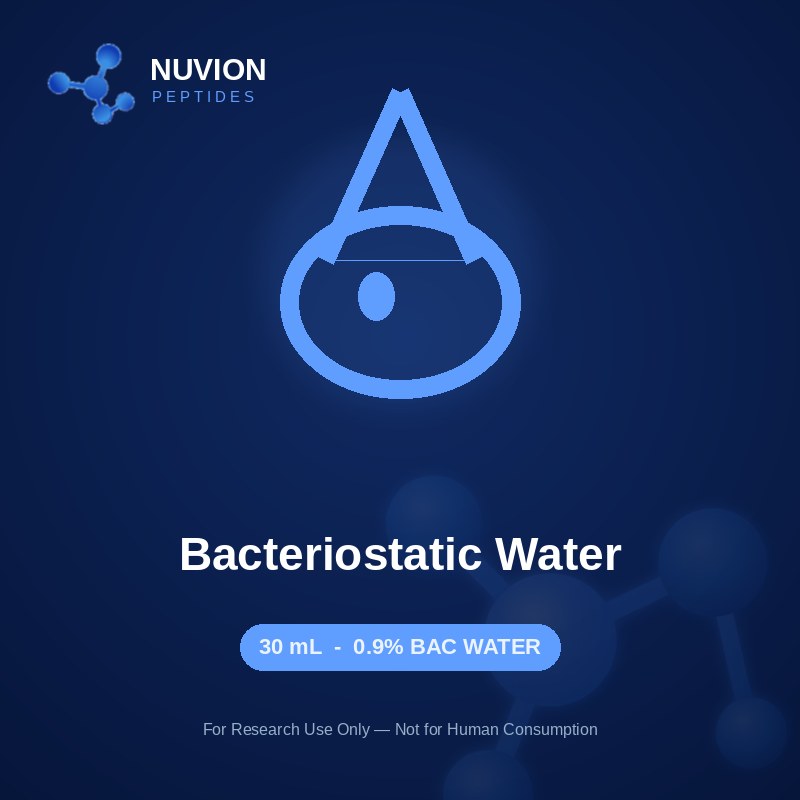
Bacteriostatic Water: Essential Protocol for Peptide Reconstitution
In peptide research, the solvent matters as much as the peptide. Bacteriostatic water (“BAC water”) is the industry standard for reconstituting lyophilized (freeze-dried) peptides. This protocol guide covers its composition and correct handling for Canadian research laboratories.
What is bacteriostatic water?
Bacteriostatic water is sterile, non-pyrogenic water containing 0.9% benzyl alcohol (9 mg/mL). The benzyl alcohol acts as a bacteriostatic preservative, inhibiting microbial growth inside the vial after the seal is punctured. Unlike single-use sterile water, this allows multi-dose withdrawal over several days — essential when drawing small, precise volumes across a study.
Why it’s critical for peptide stability
Reconstitution brings a peptide out of its stable dehydrated state, introducing two risks:
- Microbial contamination — bacteria degrade the peptide sequence and invalidate results.
- Chemical degradation — improper pH or mineral content can denature or precipitate the peptide.
Bacteriostatic water provides a neutral, stable environment that extends the working shelf-life of the reconstituted solution.
Best practices for Canadian laboratories
- Sterile technique: wipe the rubber septum of both vials with a 70% isopropyl alcohol prep pad before every draw.
- Storage: refrigerate the reconstituted mixture at 2°C–8°C.
- The 28-day rule: discard a punctured multi-dose vial after 28 days — preservative efficacy declines over time.
- Avoid contamination: never touch the needle to any surface; use a fresh sterile needle for each draw.
Regulatory & safety note
- Not for self-administration — strictly professional, clinical, or laboratory use.
- Source verification — buy only sterile, clearly labeled bacteriostatic water with a listed expiration date from reputable suppliers. Homemade solutions risk endotoxin contamination.
Shop research-grade bacteriostatic water to pair with peptides like BPC-157 and TB-500 — all third-party tested with a COA.
This guide is part of our Peptides Canada research hub — explore the full library of compound guides.
Research disclaimer: Educational content for laboratory professionals only. Handle in accordance with institutional safety protocols. Not for human consumption or unauthorized use.
Frequently Asked Questions
What is Bacteriostatic Water: Essential Protocol for Peptide Reconstitution used for in research?
Bacteriostatic Water: Essential Protocol for Peptide Reconstitution is studied in laboratory settings for its published biochemical pathways and signaling roles. Nuvion supplies it strictly for in-vitro and research use — not for human or veterinary consumption.
Are Nuvion peptides for human use?
No. All products are sold strictly for laboratory and research use only (RUO). They ship as sterile lyophilized powder for reconstitution per your lab protocol.
Does Nuvion ship within Canada and provide a COA?
Yes. Orders ship discreetly within Canada with tracking. Every batch includes third-party testing documentation; request the certificate of analysis for your lot from the product page or our COA directory.