Retatrutide: Investigational Triple Hormone Receptor Agonist
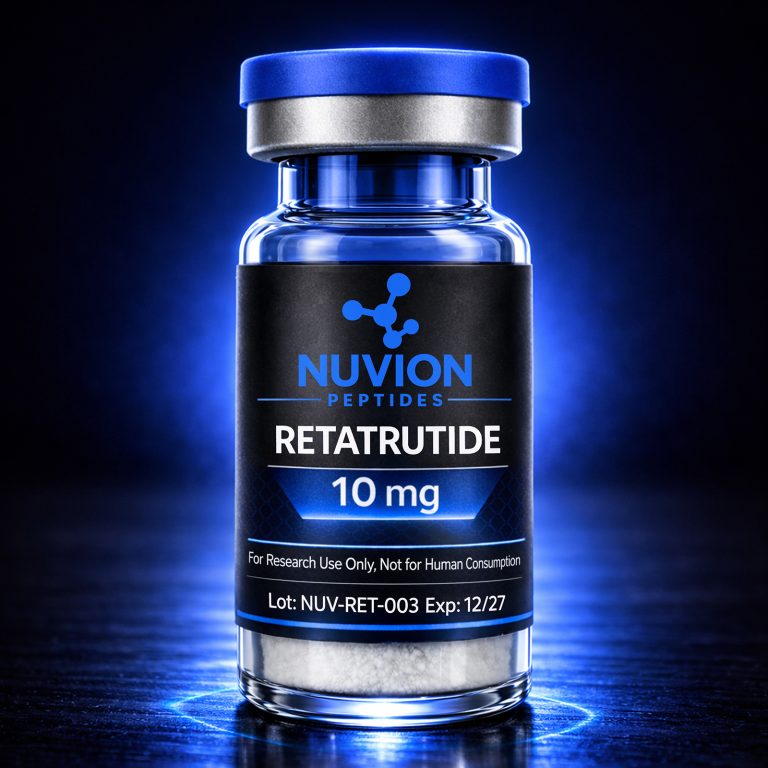
Retatrutide represents a significant milestone in metabolic research. Unlike earlier incretin-based molecules that target one or two receptors, retatrutide is a “triple agonist,” engineered to simultaneously activate receptors for GIP (glucose-dependent insulinotropic polypeptide), GLP-1 (glucagon-like peptide-1), and glucagon.
As of 2026, retatrutide remains an investigational molecule, evaluated in Phase 3 clinical programs (e.g. TRIUMPH, TRANSCEND-T2D). It is not approved for public use or medical prescription.
Mechanism of action: the “triple-G” synergy
- GIP receptor agonism: complements GLP-1 in studies of insulin secretion and lipid metabolism.
- GLP-1 receptor agonism: stimulates satiety signaling and slows gastric emptying in research models.
- Glucagon receptor agonism: the distinctive third axis — studied for increasing energy expenditure and mobilizing stored fat.
Current research status
- Clinical trials: extensive Phase 3 trials evaluate obesity, type 2 diabetes, osteoarthritis, sleep apnea, and cardiovascular/renal outcomes.
- Regulatory status: not approved by Health Canada or the FDA; no DIN or authorized therapeutic indication.
- Availability: for legitimate laboratory research only. Always verify source purity and certificates of analysis.
Research-grade sourcing
For valid data, research requires authenticated, high-purity compounds. Our Retatrutide is independently third-party tested to over 99% purity with a certificate of analysis on every lot. Browse related metabolic research peptides: Semaglutide, Tirzepatide.
This guide is part of our Peptides Canada research hub — explore the full library of compound guides.
Note: This information is for educational research purposes only. Retatrutide is an investigational compound, not authorized for human consumption, sale, or medical use outside formal clinical trials. It is a research chemical intended strictly for laboratory and research use.
Frequently Asked Questions
What is Retatrutide: Investigational Triple Hormone Receptor Agonist used for in research?
Retatrutide: Investigational Triple Hormone Receptor Agonist is studied in laboratory settings for its published biochemical pathways and signaling roles. Nuvion supplies it strictly for in-vitro and research use — not for human or veterinary consumption.
Are Nuvion peptides for human use?
No. All products are sold strictly for laboratory and research use only (RUO). They ship as sterile lyophilized powder for reconstitution per your lab protocol.
Does Nuvion ship within Canada and provide a COA?
Yes. Orders ship discreetly within Canada with tracking. Every batch includes third-party testing documentation; request the certificate of analysis for your lot from the product page or our COA directory.