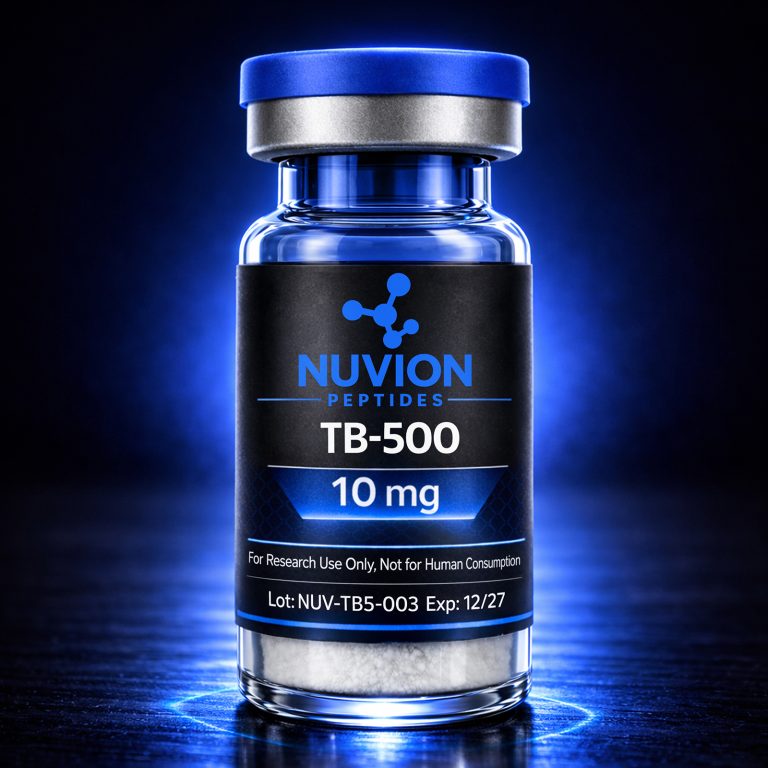
TB-500: The Science of Cellular Migration and Tissue Regeneration
While BPC-157 is often noted for structural protection, TB-500 (a synthetic version of the naturally occurring peptide Thymosin Beta-4) is the “engine” of cellular movement. Found in high concentrations in blood platelets and white blood cells, this 43-amino-acid peptide is a major subject in regenerative research — in Canada, primarily for studies of systemic recovery, muscle fibers, and cardiovascular repair.
Molecular mechanism: how TB-500 drives repair
Its defining characteristic is its relationship with actin, a vital protein for cell structure and movement.
- Actin sequestration (G-actin binding): binds monomeric G-actin, creating a reservoir of building blocks the cell uses to change shape and move.
- Increased cellular motility: by regulating the cytoskeleton, it lets progenitor and stem cells migrate to injury sites faster.
- Angiogenesis (VEGF upregulation): stimulates new capillaries and promotes endothelial cell differentiation into functional vessel tubules.
Key research applications
- Skeletal muscle & tendons: studied for activating satellite cells (muscle-fiber precursors) and reducing restrictive scar tissue.
- Cardiovascular science: investigated for protecting myocardium after ischemic events and promoting neovascularization.
- Dermal & corneal healing: in animal models, accelerates wound closure and corneal repair via epithelial cell migration.
TB-500 vs. Thymosin Beta-4
Thymosin Beta-4 (Tβ4) is the full-length endogenous protein; TB-500 is the synthetic version used in research. Some sequences (e.g. the LKKTETQ fragment) isolate the active healing region for better lab bioavailability.
Canadian regulatory landscape
- Health Canada: not authorized for human use; no NPN or DIN.
- Research use only: must be labeled and sold strictly for laboratory/in-vitro research.
- WADA/CCES: on the Prohibited List (S2) — banned in competitive sport.
Lab handling & storage
- Reconstitution: sterile bacteriostatic water.
- Storage: lyophilized powder at −20°C long-term; refrigerate after reconstitution and use within ~7–14 days.
Browse research-grade TB-500, Thymosin Alpha-1, or the BPC-157 + TB-500 blend — each third-party tested to over 99% purity with a COA.
This guide is part of our Peptides Canada research hub — explore the full library of compound guides.
Disclaimer: Educational/research content only. TB-500 is a research chemical, not for human consumption or veterinary use.
Frequently Asked Questions
What is TB-500: The Science of Cellular Migration and Tissue Regeneration used for in research?
TB-500: The Science of Cellular Migration and Tissue Regeneration is studied in laboratory settings for its published biochemical pathways and signaling roles. Nuvion supplies it strictly for in-vitro and research use — not for human or veterinary consumption.
Are Nuvion peptides for human use?
No. All products are sold strictly for laboratory and research use only (RUO). They ship as sterile lyophilized powder for reconstitution per your lab protocol.
Does Nuvion ship within Canada and provide a COA?
Yes. Orders ship discreetly within Canada with tracking. Every batch includes third-party testing documentation; request the certificate of analysis for your lot from the product page or our COA directory.