Thymosin Beta-4: The Parent Peptide Behind TB-500
Thymosin Beta-4 (TB-4) is a naturally occurring 43-amino-acid peptide found across many tissues, central to the body’s cell-migration and tissue-repair signaling. It is the parent molecule behind the widely studied research peptide TB-500 — understanding TB-4 clarifies what TB-500 research is actually modeling.
TB-4 vs. TB-500
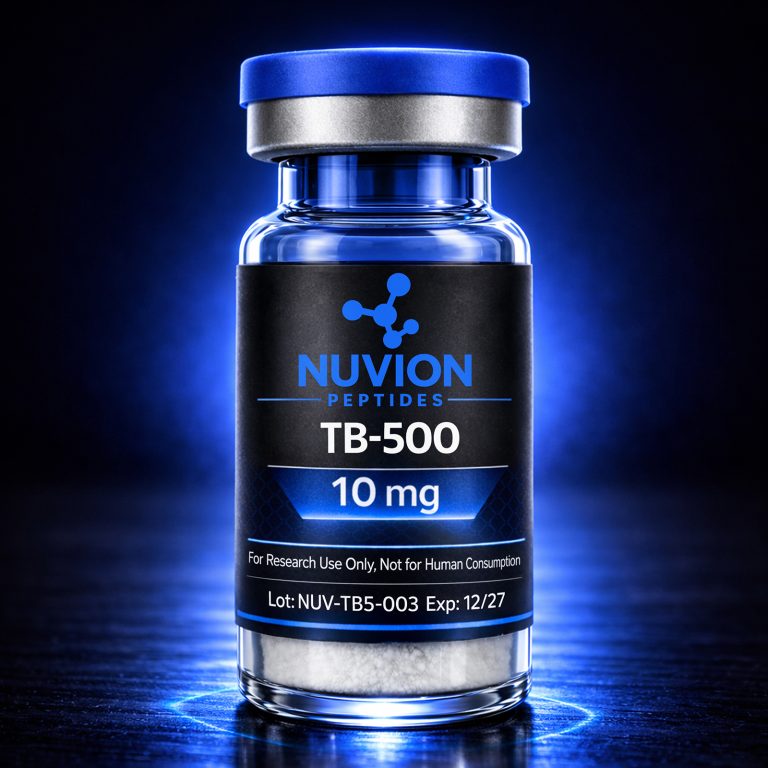
TB-500 is a synthetic fragment derived from the active region of thymosin beta-4. TB-4 is the full native peptide; TB-500 isolates the portion responsible for actin binding and cell migration, which is why the two are often discussed interchangeably in research contexts despite being distinct molecules.
Mechanism in research models
- Actin regulation: TB-4 binds G-actin, promoting the cell motility that underlies tissue repair.
- Cell migration: facilitates movement of progenitor/repair cells toward injury sites.
- Inflammation modulation: studied for down-regulating inflammatory signaling.
Research areas
- Wound-healing models — accelerated repair via cell migration.
- Tissue / musculoskeletal repair — muscle, tendon, and connective-tissue injury models.
- Cardiovascular research — cardiac-tissue protection and repair models.
Handling for Canadian research labs
- Not authorized by Health Canada for human use — laboratory research only. Prohibited by WADA / CCES in sport.
- Store lyophilized at −20°C; reconstitute with sterile bacteriostatic water; protect from UV and vigorous shaking.
- Source from reputable suppliers providing third-party purity testing and a COA.
Shop the synthetic research fragment TB-500, its frequent research pair BPC-157, or the combined BPC-157 + TB-500 blend — all third-party tested to over 99% purity with a COA.
This guide is part of our Peptides Canada research hub — explore the full library of compound guides.
Disclaimer: Educational and research content only. Thymosin Beta-4 is discussed strictly as a research chemical, not for human consumption or therapeutic use. All work must comply with Canadian regulations and institutional ethics approvals.
Frequently Asked Questions
What is Thymosin Beta-4: The Parent Peptide Behind TB-500 used for in research?
Thymosin Beta-4: The Parent Peptide Behind TB-500 is studied in laboratory settings for its published biochemical pathways and signaling roles. Nuvion supplies it strictly for in-vitro and research use — not for human or veterinary consumption.
Are Nuvion peptides for human use?
No. All products are sold strictly for laboratory and research use only (RUO). They ship as sterile lyophilized powder for reconstitution per your lab protocol.
Does Nuvion ship within Canada and provide a COA?
Yes. Orders ship discreetly within Canada with tracking. Every batch includes third-party testing documentation; request the certificate of analysis for your lot from the product page or our COA directory.