Semax: A Nootropic Peptide in Experimental Research
Semax (Met-Glu-His-Phe-Pro-Gly-Pro) is a synthetic heptapeptide modeled after a fragment of Adrenocorticotropic Hormone (ACTH), engineered to be devoid of systemic hormonal activity and focus instead on neurological signaling. It is primarily researched for its nootropic (cognitive) and neuroprotective properties.
Mechanism: neurological signaling
- BDNF upregulation: its most-studied feature — increases Brain-Derived Neurotrophic Factor and its TrkB receptor, key to synaptic plasticity and neuron survival/growth.
- Neurotransmitter modulation: influences dopamine, serotonin, and acetylcholine — relevant to focus, memory, and mood.
- Neuroprotection: studied for mitigating oxidative stress and neuroinflammation (ischemic/stroke and Alzheimer’s models).
- Melanocortin interaction: evidence of MC4R interaction relevant to cognition and energy homeostasis.
Primary research areas
- Cognitive enhancement — memory, learning, attention.
- Neurodegenerative models — amyloid-beta accumulation, cognitive decline.
- Ischemic recovery — protecting brain tissue after oxygen deprivation.
Canadian regulatory status
- Not authorized by Health Canada for human use; no DIN/NPN.
- Restricted to the research-chemical market — not assessed for safety/efficacy.
- Source only high-purity, COA-backed material from reputable suppliers.
Laboratory handling
- Store lyophilized at −20°C; reconstitute with sterile bacteriostatic water using aseptic technique.
- Light-sensitive — keep vials away from direct light.
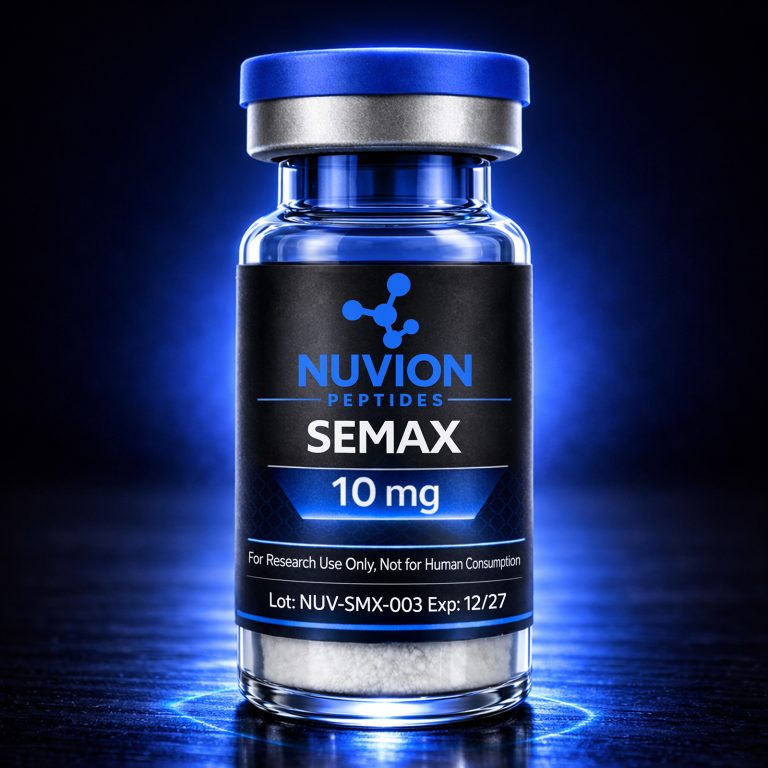
Browse research-grade Semax and related cognitive-research peptides like Selank — third-party tested to over 99% purity with a COA.
This guide is part of our Peptides Canada research hub — explore the full library of compound guides.
Note: Educational/research content only. Semax is an experimental research chemical, not for human consumption or therapeutic use.
Frequently Asked Questions
What is Semax: A Nootropic Peptide in Experimental Research used for in research?
Semax: A Nootropic Peptide in Experimental Research is studied in laboratory settings for its published biochemical pathways and signaling roles. Nuvion supplies it strictly for in-vitro and research use — not for human or veterinary consumption.
Are Nuvion peptides for human use?
No. All products are sold strictly for laboratory and research use only (RUO). They ship as sterile lyophilized powder for reconstitution per your lab protocol.
Does Nuvion ship within Canada and provide a COA?
Yes. Orders ship discreetly within Canada with tracking. Every batch includes third-party testing documentation; request the certificate of analysis for your lot from the product page or our COA directory.