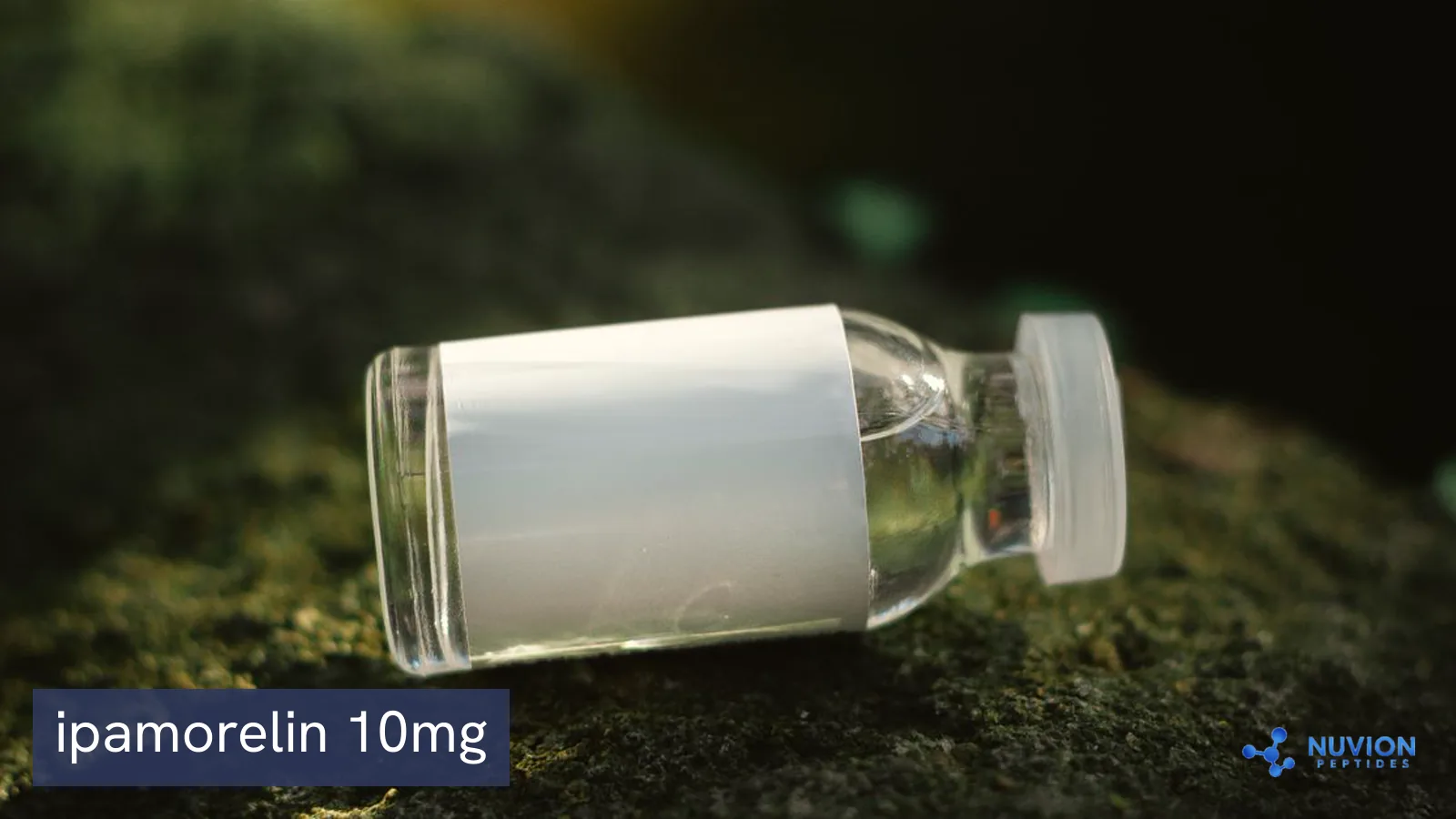
Ipamorelin 10mg Canada: Research Peptide Guide (2026)
Ipamorelin 10mg refers to a synthetic pentapeptide, a growth hormone secretagogue (GHS), provided in a 10-milligram lyophilized vial for laboratory and research applications. It functions by selectively mimicking ghrelin, binding to the growth hormone secretagogue receptor (GHSR) in the pituitary gland to stimulate the release of growth hormone (GH) without significantly affecting other hormones like cortisol, prolactin, or adrenocorticotropic hormone (ACTH).
Understanding Ipamorelin 10mg: A Deeper Dive
Ipamorelin is a well-regarded growth hormone secretagogue, a class of compounds designed to promote the natural secretion of growth hormone (GH) from the pituitary gland. Unlike some older GHS peptides, Ipamorelin exhibits a high degree of selectivity, which is a key characteristic for researchers. This selectivity means it primarily targets the GHSR, leading to a pulsatile release of GH that closely mimics the body’s physiological rhythm, rather than a sustained, unnatural spike. This selective action is crucial because it minimizes the activation of other hormone pathways, such as those involving cortisol, prolactin, and ACTH. Cortisol, in particular, is a stress hormone that, when elevated chronically, can lead to undesirable effects on metabolism and immune function. The absence of significant cortisol or prolactin elevation with Ipamorelin makes it a subject of considerable interest in research settings exploring GH regulation and its potential downstream effects. Researchers often investigate its impact on various physiological processes that are modulated by GH, including metabolic regulation, tissue repair mechanisms, and aspects of cellular regeneration. The 10mg presentation is a common and practical quantity for laboratory stock, allowing for precise reconstitution and dosage calculations across a range of experimental designs. Understanding its precise molecular structure and its interaction with the GHSR provides insight into its targeted action and distinguishes it from broader-acting growth hormone-releasing peptides (GHRPs).
Mechanism of Action: How Ipamorelin Functions
Ipamorelin’s mechanism of action is centered around its interaction with the growth hormone secretagogue receptor (GHSR), primarily located in the anterior pituitary gland. When Ipamorelin binds to the GHSR, it initiates a cascade of intracellular events that lead to the increased synthesis and release of growth hormone. This binding action is specific and distinct from how growth hormone-releasing hormone (GHRH) functions. While GHRH stimulates GH release by activating different receptors and pathways, Ipamorelin’s role is to amplify the natural pulsatile release of GH. It achieves this without significantly impacting the release of other hormones, such as prolactin, cortisol, or ACTH, which can be a concern with some other GH-releasing compounds. This selective stimulation is attributed to its unique molecular structure, a pentapeptide sequence that optimizes its binding affinity and downstream signaling profile. The result is a more physiological release pattern of GH, avoiding the desensitization of the pituitary that can occur with continuous, non-pulsatile stimulation. In research, understanding this specific mechanism is vital for interpreting experimental results, particularly when investigating the therapeutic potential of GH modulation in contexts like muscle wasting, bone density, or metabolic disorders. Its ability to promote GH secretion without elevating other stress hormones makes it a valuable tool for studies requiring precise control over hormonal environments. The interaction also involves a feedback loop with somatostatin, a hormone that inhibits GH release. Ipamorelin’s mechanism helps to overcome somatostatin’s inhibitory effects, further enhancing GH secretion. Researchers often compare its action to that of ghrelin, the endogenous ligand for GHSR, noting Ipamorelin’s enhanced stability and specific binding characteristics in various experimental models.
Reconstitution and Handling for Laboratory Use
Proper reconstitution and sterile handling of Ipamorelin 10mg are paramount for maintaining its purity and efficacy in a research setting. The peptide is typically supplied as a lyophilized (freeze-dried) powder, which requires reconstitution with a sterile solvent before use. The most common and recommended solvent is bacteriostatic water, which contains a small percentage of benzyl alcohol to inhibit bacterial growth, thereby extending the shelf life of the reconstituted solution. Researchers should use sterile syringes and needles, and all surfaces should be disinfected prior to handling. To reconstitute, gently inject the bacteriostatic water into the vial, aiming the stream against the side of the glass rather than directly onto the powder to avoid foaming or agitation. Once the solvent is added, do not shake the vial vigorously; instead, gently swirl it or allow it to sit in a refrigerator for a short period to allow the powder to dissolve completely. Shaking can damage the delicate peptide structure. A common reconstitution ratio for a 10mg vial is 2mL of bacteriostatic water, resulting in a concentration of 5mg/mL. This concentration allows for precise measurement of smaller doses for various experimental protocols.
Once reconstituted, Ipamorelin should be stored correctly to preserve its stability. The solution should be kept refrigerated at 2-8°C (36-46°F) and protected from light. Under these conditions, it typically remains stable for several weeks. For longer-term storage, aliquoting the reconstituted solution into smaller, sterile vials and freezing them at -20°C or colder can extend stability for several months. However, repeated freeze-thaw cycles should be avoided as they can degrade the peptide. Before each use, visually inspect the solution for any particulate matter or discoloration, which could indicate degradation or contamination. Proper disposal of used vials and syringes should follow standard laboratory hazardous waste protocols. Adhering to these strict reconstitution and storage guidelines ensures the integrity of the Ipamorelin peptide, providing reliable and reproducible results for all research applications. For further information on general peptide handling, Canadian researchers may find our guide on sourcing peptides in Canada useful.
Evaluating Ipamorelin Suppliers in Canada
When sourcing Ipamorelin 10mg for laboratory research in Canada, the selection of a reputable supplier is a critical step that directly impacts the integrity and reliability of experimental outcomes. Researchers must prioritize suppliers who demonstrate an unwavering commitment to product quality, transparency, and compliance with research-grade standards. Key indicators of a trustworthy supplier include the provision of comprehensive third-party testing results, specifically Certificates of Analysis (CoAs). These CoAs should confirm the peptide’s identity, purity, and concentration, ensuring that the Ipamorelin 10mg received is exactly as advertised and free from significant contaminants. Purity levels, typically exceeding 98% for research peptides, are a non-negotiable benchmark. Suppliers should also be transparent about their manufacturing processes and quality control measures, offering insights into how their products are synthesized and handled to prevent degradation or contamination.
Beyond product quality, logistical considerations are also vital for Canadian researchers. A reliable supplier will offer secure and timely shipping within Canada, understanding the need for prompt delivery while maintaining product stability. Customer support and responsiveness are also important, as researchers may have specific questions regarding product specifications, handling, or bulk ordering. Look for suppliers with a strong reputation within the research community, often evidenced by positive testimonials or long-standing relationships with research institutions. Furthermore, a supplier’s adherence to legal and ethical guidelines for the distribution of research chemicals is paramount. This includes clearly stating that products are for laboratory and research use only and not for human or veterinary consumption. Nuvion Peptides, for instance, provides current batch-specific third-party test results for all its compounds, ensuring that researchers in Canada have access to rigorously verified materials. You can explore our catalogue for various research peptides and related compounds. Always review a supplier’s terms and conditions, focusing on their policies regarding product quality, returns, and shipping, to ensure they align with your laboratory’s procurement standards and ethical framework.
Nuvion Peptides products are sold strictly for laboratory and research use only, not for human or veterinary consumption, diagnosis, or treatment.
Frequently Asked Questions
What is Ipamorelin 10mg?
Ipamorelin 10mg is a synthetic growth hormone secretagogue (GHS) supplied as a 10-milligram lyophilized powder for laboratory research. It selectively stimulates the pituitary gland to release growth hormone (GH) without significantly affecting other hormones like cortisol.
How does Ipamorelin work?
Ipamorelin works by binding to the growth hormone secretagogue receptor (GHSR) in the pituitary gland, mimicking ghrelin. This action triggers a natural, pulsatile release of growth hormone (GH) while maintaining selectivity and minimizing other hormonal influences.
How should Ipamorelin 10mg be reconstituted?
Ipamorelin 10mg should be reconstituted with sterile bacteriostatic water. Gently inject the solvent against the vial’s side, then swirl gently to dissolve the powder completely, avoiding vigorous shaking which can damage the peptide.
What is the recommended storage for reconstituted Ipamorelin?
Reconstituted Ipamorelin should be stored refrigerated at 2-8°C (36-46°F) and protected from light for several weeks. For longer-term storage, it can be aliquoted and frozen at -20°C or colder, avoiding repeated freeze-thaw cycles.
Why is third-party testing important for Ipamorelin suppliers?
Third-party testing, documented via Certificates of Analysis (CoAs), is crucial for Ipamorelin suppliers to verify the peptide’s identity, purity, and concentration. This ensures researchers receive high-quality, uncontaminated material for reliable experimental results.
Can Ipamorelin be used for human consumption?
No, Ipamorelin, like all products from Nuvion Peptides, is sold strictly for laboratory and research use only. It is not intended for human or veterinary consumption, diagnosis, or treatment.