
GHK-Cu Canada: Sourcing & Research Applications (2026)
GHK-Cu, a naturally occurring copper peptide, is available in Canada for legitimate laboratory and research purposes. Researchers seeking to buy GHK-Cu in Canada must prioritize suppliers who provide high-purity compounds accompanied by comprehensive third-party testing to ensure reliable experimental outcomes.
Understanding GHK-Cu: The Copper Peptide
GHK-Cu, or Glycyl-L-Histidyl-L-Lysine-Copper(II), is a small, naturally occurring tripeptide with a strong affinity for copper ions. It was first isolated from human plasma and has since been extensively studied for its diverse biological activities. The peptide consists of three amino acids—glycine, histidine, and lysine—chelated with a copper atom, which is crucial to its function. This copper-peptide complex plays a significant role in various physiological processes, particularly those related to tissue regeneration and repair.
Mechanism of Action and Biological Roles
The primary mechanism through which GHK-Cu exerts its effects involves its ability to complex with copper. Copper is an essential trace element vital for numerous enzymatic reactions and cellular functions. When GHK-Cu enters the body, it readily forms a complex with copper ions, facilitating their transport and delivery to cells that require them. This targeted delivery allows copper to participate in critical enzymatic processes, including those involved in:
- Extracellular Matrix Remodeling: GHK-Cu stimulates the synthesis of collagen, elastin, and glycosaminoglycans, which are fundamental components of the extracellular matrix. This makes it a significant area of research for skin repair and anti-aging studies.
- Antioxidant Defence: The peptide enhances the activity of superoxide dismutase (SOD), a potent antioxidant enzyme, thereby reducing oxidative stress and protecting cells from damage.
- Anti-inflammatory Response: GHK-Cu has been shown to modulate inflammatory pathways, reducing the production of pro-inflammatory cytokines and promoting tissue healing.
- Angiogenesis: Research suggests GHK-Cu can stimulate the formation of new blood vessels, which is critical for wound healing and tissue regeneration by improving nutrient and oxygen supply.
These multifaceted roles make GHK-Cu a compelling subject for research into a wide array of biological systems, from dermatological applications to more systemic regenerative processes.
Research Applications of GHK-Cu
The unique properties of GHK-Cu have led to extensive investigation across various scientific disciplines. Its regenerative capabilities are particularly noteworthy, making it a focal point in tissue engineering and reparative medicine research.
Skin and Tissue Regeneration Studies
One of the most well-documented areas of GHK-Cu research is its impact on skin health and wound healing. Studies have demonstrated its ability to:
- Promote Collagen and Elastin Synthesis: By stimulating fibroblasts, GHK-Cu increases the production of collagen and elastin, leading to improvements in skin elasticity, firmness, and overall texture in research models.
- Accelerate Wound Healing: In various experimental setups, GHK-Cu has been shown to enhance re-epithelialization, reduce scar tissue formation, and improve wound contraction.
- Reduce Photo-damage: Its antioxidant properties contribute to protecting skin cells from UV-induced damage, which is a key area of study in dermatological research.
Anti-inflammatory and Antioxidant Research
Beyond its regenerative effects, GHK-Cu’s capacity to mitigate inflammation and oxidative stress is a significant area of investigation. Researchers explore how this peptide can:
- Modulate Inflammatory Cytokines: Studies examine its role in downregulating pro-inflammatory signals and upregulating anti-inflammatory responses, which could have implications for conditions characterized by chronic inflammation.
- Scavenge Free Radicals: By enhancing endogenous antioxidant systems, GHK-Cu contributes to cellular protection against reactive oxygen species, a critical factor in understanding aging and disease progression.
Hair Growth and Neuroprotective Research
Emerging research also explores GHK-Cu’s potential in other areas:
- Hair Follicle Stimulation: Preliminary studies suggest GHK-Cu may promote hair follicle growth and increase hair thickness, likely through its effects on tissue remodeling and angiogenesis.
- Neuroprotection: Some investigations are looking into GHK-Cu’s role in neuronal health, particularly its anti-inflammatory and antioxidant effects in the central nervous system, though this area requires much more extensive research.
Sourcing High-Purity GHK-Cu in Canada for Research
For Canadian researchers, securing high-purity GHK-Cu is paramount to the integrity and reproducibility of experimental results. The market for research peptides requires careful discernment to ensure quality and compliance.
Importance of Purity and Third-Party Testing
When you look to buy GHK-Cu in Canada, the purity of the compound is non-negotiable. Contaminants or impurities can significantly skew research findings, leading to erroneous conclusions. Reputable Canadian suppliers will provide:
- Certificates of Analysis (COAs): These documents, ideally from independent third-party laboratories, confirm the peptide’s identity, purity level (often >98%), and absence of common contaminants.
- Batch-Specific Testing: Each batch of GHK-Cu should have its own COA, reflecting ongoing quality control.
- HPLC and Mass Spectrometry Data: These analytical methods are gold standards for verifying purity and molecular structure.
Evaluating Canadian Research Peptide Suppliers
Selecting a reliable supplier is crucial. Researchers should consider the following factors:
- Transparency: A trustworthy supplier openly shares information about their sourcing, manufacturing processes, and quality control measures.
- Customer Service and Support: Responsive and knowledgeable support is invaluable for answering technical questions related to products and orders.
- Shipping and Logistics: Since this is a Canadian-specific guide, ensure the supplier ships within Canada, understands local regulations, and offers reliable, discreet shipping.
- Reputation and Reviews: While anecdotal, community feedback can offer insights into a supplier’s reliability and product quality.
Nuvion Peptides is committed to providing Canadian researchers with high-quality GHK-Cu and other research compounds, backed by transparent third-party testing. We invite you to explore our catalogue for your research needs.
Handling, Storage, and Reconstitution for Laboratory Use
Proper handling and storage of GHK-Cu are essential to maintain its stability and efficacy throughout your research. Peptides are delicate molecules that can degrade if not managed correctly.
Receiving and Initial Storage
GHK-Cu is typically supplied as a lyophilized (freeze-dried) powder in a sealed vial. Upon receipt, it should be immediately stored in a cool, dark, and dry place, preferably a refrigerator (2-8°C). For long-term storage of the lyophilized powder, a freezer (-20°C or colder) is often recommended to maximize shelf life, protecting it from moisture and light.
Reconstitution Protocol
Reconstitution involves dissolving the lyophilized powder in a sterile solvent to create a working solution. The most common solvent is sterile bacteriostatic water (BW), which contains 0.9% benzyl alcohol to inhibit bacterial growth. Sterile distilled water can also be used, but solutions made with it typically have a shorter shelf life.
- Gather Supplies: You will need your GHK-Cu vial, sterile bacteriostatic water, sterile syringes, and sterile needles.
- Determine Desired Concentration: Calculate the amount of solvent needed based on the peptide amount (e.g., 5mg) and your target concentration (e.g., 1mg/mL). For 5mg, 5mL of solvent would yield 1mg/mL.
- Prepare the Solvent: Draw the calculated amount of sterile bacteriostatic water into a sterile syringe.
- Inject into Vial: Carefully inject the solvent into the GHK-Cu vial, aiming the stream down the side of the glass to avoid direct impact on the delicate peptide powder.
- Gentle Mixing: Do NOT shake the vial vigorously. Instead, gently swirl or roll the vial between your palms to allow the peptide to fully dissolve. This process may take several minutes. Ensure complete dissolution before proceeding.
For more detailed information on general peptide handling, consider referring to a comprehensive research peptide sourcing guide in Canada.
Long-Term Storage of Reconstituted Solution
Once reconstituted, GHK-Cu solutions are more susceptible to degradation. They should be stored in a refrigerator (2-8°C) and protected from light. For extended storage, aliquoting the solution into smaller, single-use vials and freezing them (-20°C or colder) can help preserve stability and prevent repeated freeze-thaw cycles, which can degrade the peptide. Always thaw aliquots slowly in the refrigerator before use and discard any unused portions.
Comparing GHK-Cu with Other Research Peptides
While GHK-Cu stands out for its unique copper-binding and regenerative properties, researchers often compare it with other peptides known for tissue repair or anti-aging effects. Understanding these distinctions helps in designing targeted research protocols.
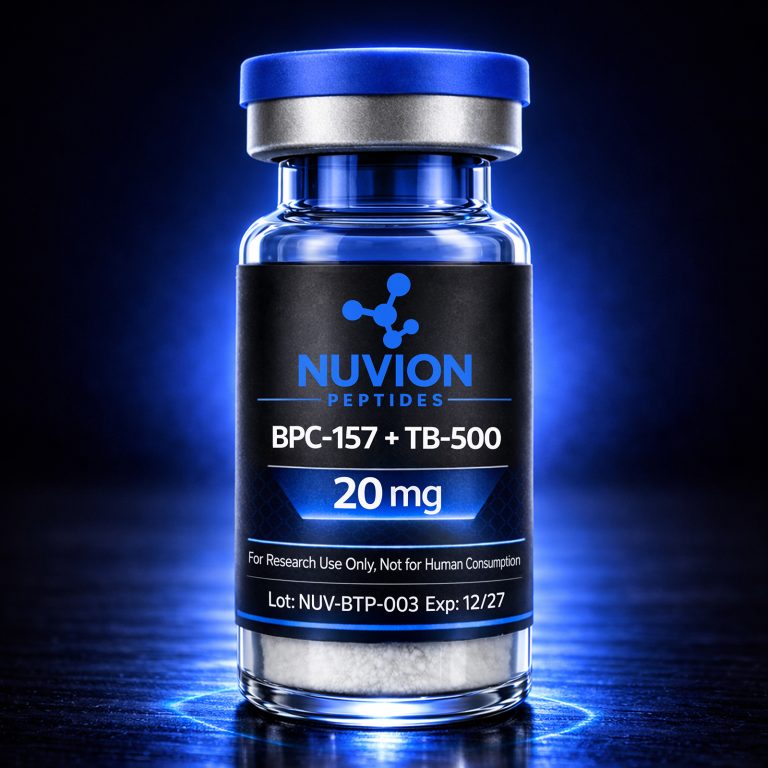
GHK-Cu vs. BPC-157
Both GHK-Cu and BPC-157 are extensively studied for their regenerative capabilities, yet their mechanisms of action differ significantly:
| Feature | GHK-Cu (Glycyl-L-Histidyl-L-Lysine-Copper(II)) | BPC-157 (Body Protection Compound-157) |
|---|---|---|
| Primary Mechanism | Copper transport, extracellular matrix remodeling, antioxidant, anti-inflammatory. | Angiogenesis, growth factor modulation (VEGF, FGF), anti-inflammatory, cytoprotective. |
| Key Research Areas | Skin regeneration, wound healing, hair growth, anti-aging. | Systemic tissue repair (muscle, tendon, ligament, gut), anti-ulcer, neuroprotection. |
| Composition | Tripeptide complexed with copper. | Pentadecapeptide (15 amino acids). |
| Natural Occurrence | Found in human plasma. | Derived from gastric juice protein. |
While GHK-Cu’s research tends to focus more on localized tissue repair and aesthetic applications, BPC-157 is explored for a broader spectrum of systemic healing, including gastrointestinal issues and musculoskeletal injuries. They are not mutually exclusive in research and can sometimes be studied for complementary effects.
GHK-Cu vs. Epitalon
Epitalon, a tetrapeptide, is often researched for its potential anti-aging effects, primarily through its influence on telomerase activity and melatonin production. This contrasts with GHK-Cu’s more direct role in tissue regeneration and repair:
- Epitalon Focus: Research on Epitalon typically centers on extending cellular lifespan, modulating circadian rhythms, and its potential impact on aging processes at a systemic level.
- GHK-Cu Focus: As discussed, GHK-Cu research is more aligned with specific tissue repair, anti-inflammatory, and antioxidant pathways, particularly relevant to skin, hair, and wound healing.
Both peptides contribute to the broader field of regenerative and anti-aging research but do so through distinct biochemical pathways. Researchers choose between them, or consider them synergistically, depending on their specific experimental objectives.
Compliance Note: All products, including GHK-Cu, sold by Nuvion Peptides are strictly for laboratory and research use only. They are not intended for human or veterinary consumption, diagnosis, or treatment. Researchers must adhere to all applicable regulations and ethical guidelines in their studies.
Frequently Asked Questions
Where can researchers buy GHK-Cu in Canada?
Researchers can buy GHK-Cu in Canada from specialized suppliers of research chemicals and peptides. It is essential to choose a reputable vendor that provides third-party Certificates of Analysis to verify purity and authenticity.
What is GHK-Cu used for in research?
In research, GHK-Cu is studied for its roles in skin and tissue regeneration, wound healing, anti-inflammatory processes, antioxidant defense, and potential hair growth stimulation. Its copper-binding properties are central to these investigations.
How should GHK-Cu be stored for research purposes?
Lyophilized GHK-Cu should be stored in a refrigerator (2-8°C) or freezer (-20°C) away from light and moisture. Once reconstituted with sterile water, the solution should be refrigerated and typically has a shorter shelf life, often requiring freezing in aliquots for extended stability.
Is GHK-Cu legal to research with in Canada?
Yes, GHK-Cu is legal to possess and use for legitimate laboratory and research purposes in Canada. It is not approved for human or veterinary use and must be handled in accordance with all research guidelines and regulations.
What purity level should I look for when sourcing GHK-Cu?
Researchers should aim for GHK-Cu with a purity level of 98% or higher, as verified by independent third-party Certificates of Analysis (COAs) using methods like HPLC and Mass Spectrometry. High purity ensures reliable and accurate research outcomes.